
WHY LOVE
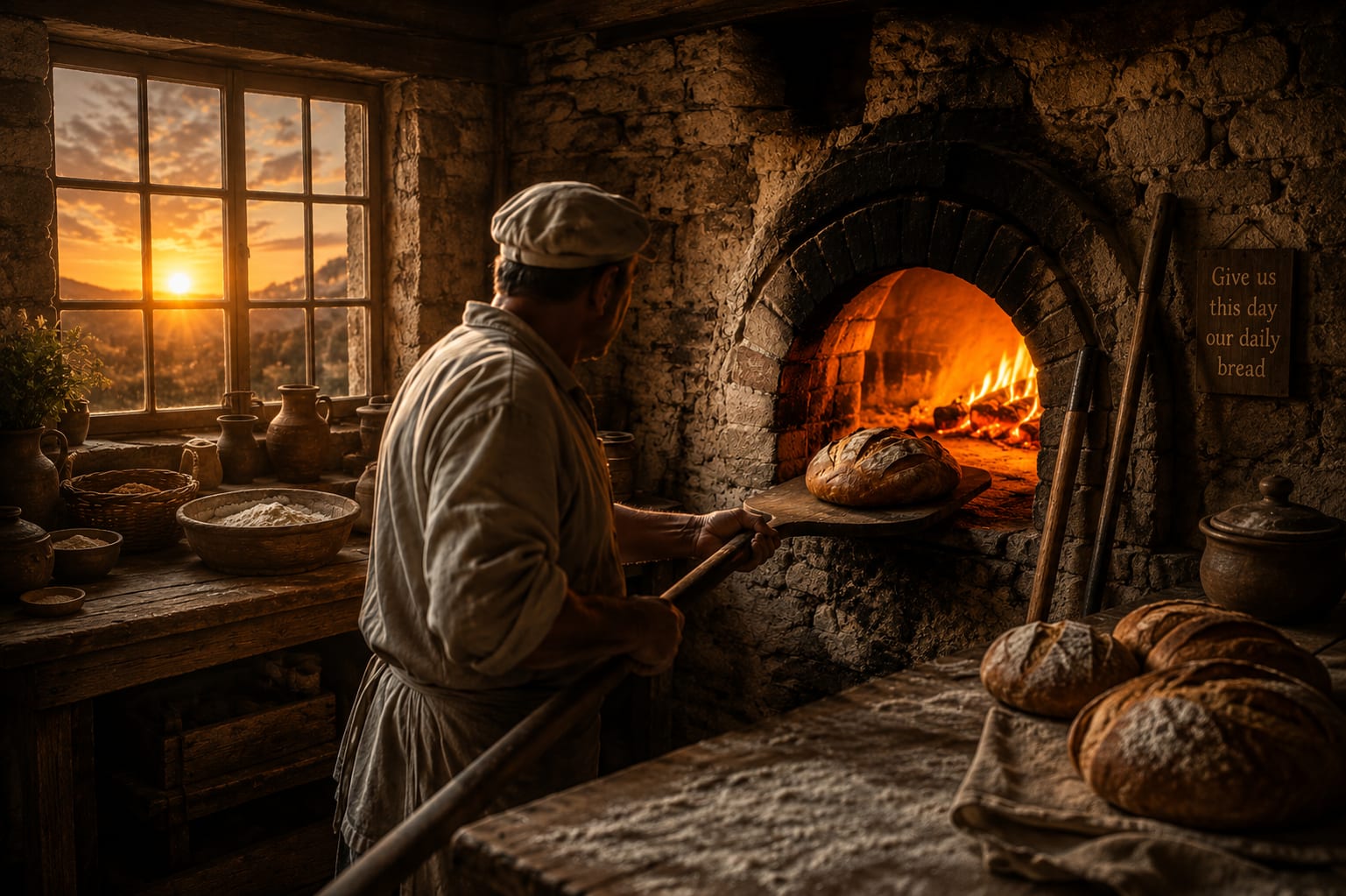
Bake Like Bread

Dear Why Team member,
I hope this week’s message finds you well, feeling loved and loving others.
The moment I considered writing on love, I felt how daunting a task it may be. But when I acknowledged my resistance—the temptation to write on another topic—I knew the direction I will choose: not away from what is difficult, but toward it.
The Why Team is all about the “Why”. And there is no greater “Why” than “Love.”
Love is why I’m writing about love at all.

Isn’t it because we love each other that we help each other? I love the insight that people don’t care what you know until they know that you care. Isn’t our greatest emotional suffering the feeling that we’re not loved? Why are we so quick to accuse others of not being loving? And how loving are we to be so accusing?
Forgive them Lord, for they know not what they do. Wow, how loving is that?
We live in a world with so many desperate for love. So many looking for evidence they’re loved. But I’ve discovered that love is more a verb, an action we do for others, rather than something others do for us.
To love or to be loved—that is the question.
And the answer may best be found in where one has control. We certainly cannot force another to love us, we may even jump through hoops in the hope that they will, but does anyone want a love that requires we behave and perform in a certain way?
I love to love. I love to be loving. And it feels to me that I cannot out-give love.
I’m aware that there are various forms of love:
Eros: passionate love
Philia: deep friendship
Pragma: enduring love
Ludus: playful love
Agape: universal love
Much of human suffering could be placed at the feet of feeling unloved. There was a time in my childhood, soon after my parents’ separation, that I remember how much I just wanted someone to tell me they loved me. I know now that I interpreted love as safety. If a grown up loved me, they would protect me. It’s no wonder that children of divorce or unstable homes are often out the door early, seeking stability and safety on their own. And they often delay marriage until later in the hope of not making their parents’ mistakes.
I’ve had thousands of hours of coaching, therapy, mentoring—and am a huge fan. Learning about oneself and why we do what we do is an incredibly fascinating endless adventure. The Why Team is mostly about giving to you what has been so generously given to me. I ascribe to the belief that to whom much is given, much is required. I’ve received so much understanding and have experienced so much peace from the insights I’ve received, I so want others to have that peace as well. It’s given my hardships purpose.
When in the oven of life, we can use the heat to bake like bread—and perhaps become sustenance for others.
How beautiful is that thought?
How might this way of thinking turn the heat into a blessing?
Our tests can become our testimony.
I think it a bit much to ask that we love all that life gives us, and for many probably, too much to even be thankful for our adversities. But if we are truly here to serve others to our fullest capacity, would that not require hardship of our own? Is not our ability to give love affected by our ability to receive love?
It’s hard to give what you don’t think you deserve.
When it comes to lies that limit, maybe there is no greater lie than to believe we are not worthy of love. That we must earn love, that we must behave in accordance with the desires of others to believe we’re worthy of love. Why is this so limiting? Because the demands of others have no limiting principle.
We cannot quench an insatiable thirst with performance.
I believe the most healing and fulfilling love is forgiveness. We all fall short of the glory of God. To receive full forgiveness for all our past mistakes, and even our future mistakes, is a feeling beyond what any human can provide.
I can only speak to my own journey and experience. My capacity to forgive others, to see them beyond any worldly identity, is born from my deepest healing beliefs. To whom much is given—and no greater gift than forgiveness as far as I’m concerned—much is required—not from compulsion, but from desire.
To increase our capacity to love, let us relax and receive more fully the love that heals—a forgiving love that keeps no accounts.
Love is patient, love is kind. It does not envy, it does not boast, it is not proud.
It does not dishonor others, it is not self-seeking, it is not easily angered, it keeps no record of wrongs. Love does not delight in evil but rejoices with the truth.7 It always protects, always trusts, always hopes, always perseveres.
1 Corinthians 13:4-8
Our BEST LIFE EVER is lived one BEST DAY EVER at a time.
Consider each new day loving THE ONE—that one person who crosses your path that may need your love more than you know. Just give them your full attention, your life currency. And imagine the change we might create by loving one more person with each new day we are given.
Attending to our hearts, receiving forgiveness, and receiving the love that heals will absolutely make us more loving—and very likely make life better for ourselves and others. Even while in the oven, bake like bread to become what others may need most on their journey.
This week, let us be even more loving, and we’ll no doubt make it a great week.
Steve Luckenbach